Failure & Fatigue Analysis
Fatigue life assessment and root-cause investigation for components that crack, break or wear out too early.
When a structure fails in service, the question is not only where it cracked but why. We combine inspection information with modal, stress and fatigue analysis to find the root cause and propose a fix that addresses it.
In one investigation a concrete leveling beam cracked after three months; the analysis showed that the operating frequency of the concrete vibrators coincided with the beam's natural frequency. Knowing the mechanism made it possible to pinpoint crack locations and the contributing factors.
For new designs, fatigue assessment predicts life under cyclic loads and highlights details — typically welds and connections — that need attention before production.
What we analyze
- Root-cause failure investigation
- Modal and resonance analysis
- Fatigue life assessment of structures, welds and connections
- Weld modelling for fatigue-relevant stresses
- Design modifications to remove the failure mechanism
What you receive
- Failure investigation or fatigue assessment report
- Identified critical locations and contributing factors
- Corrective design recommendations
Failure & Fatigue Analysis case studies
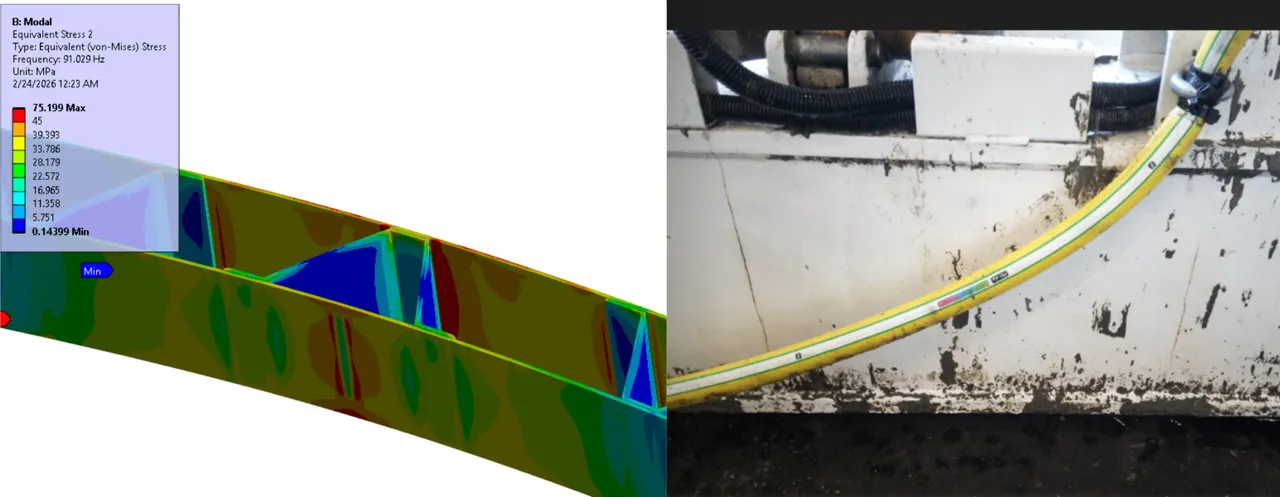
Leveling Beam
Root-cause investigation of a cracked concrete leveling beam: vibrator frequencies were exciting the beam's natural frequency.
Read case study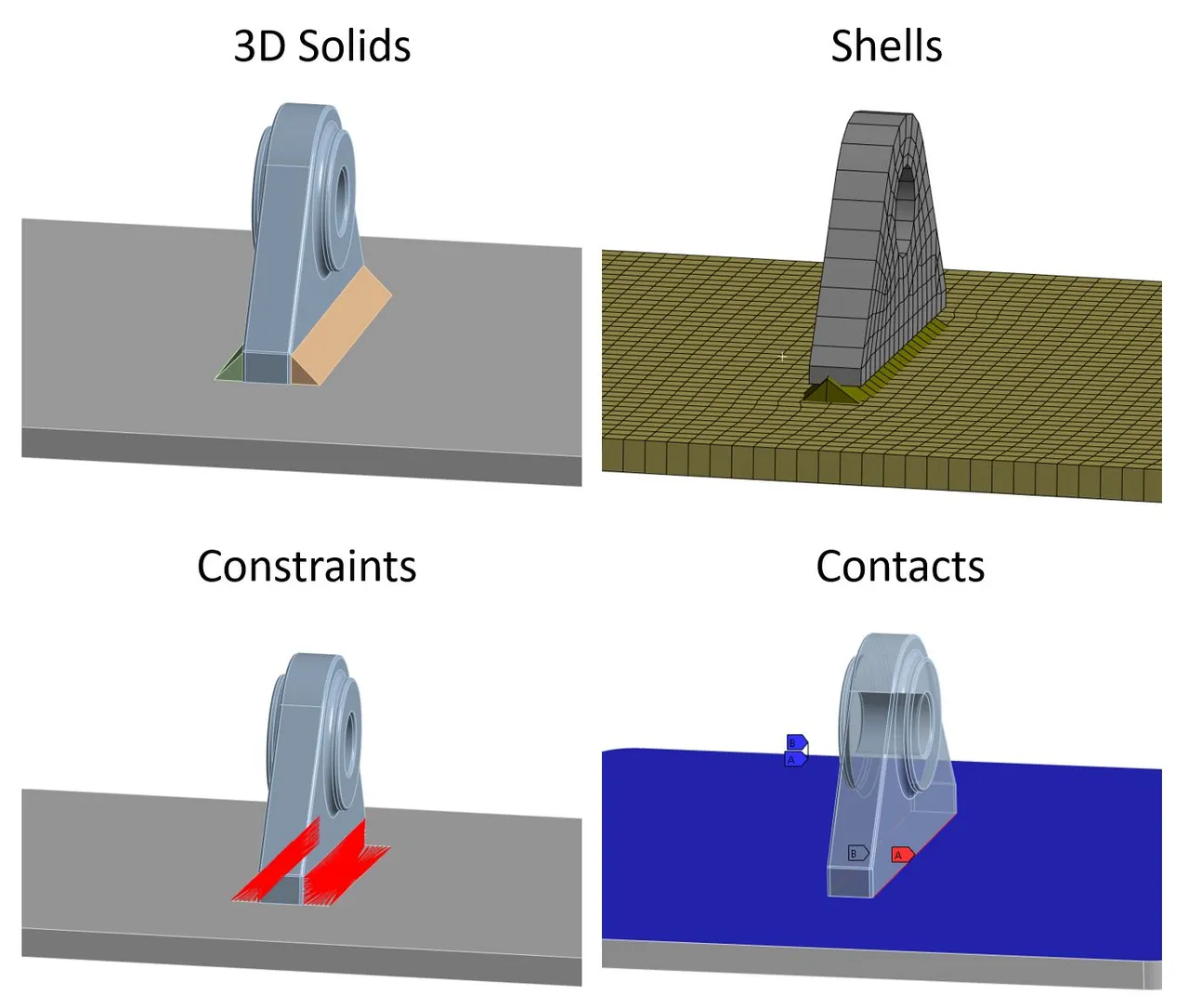
Weld Modelling Strategy
Selecting the right weld modelling method — solids, shells, constraints or contacts — for realistic load paths and fatigue stresses.
Read case study